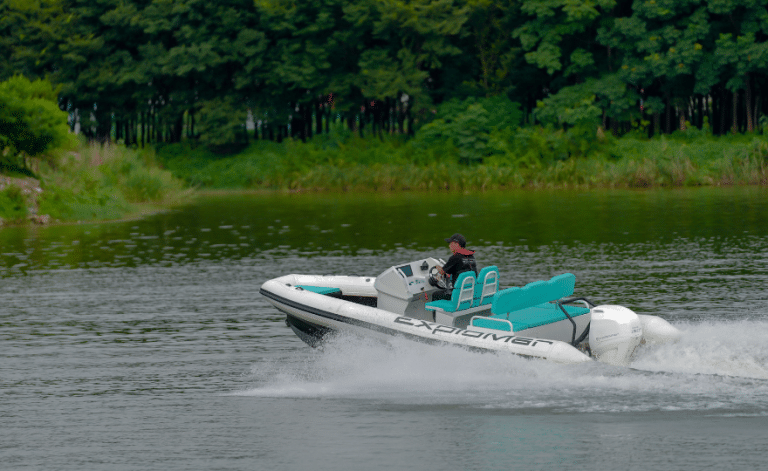

As the world works harder to cut down on emissions, we’re seeing some exciting new options in the boating industry. Electric boat motors and hybrid propulsion systems are stepping up as great alternatives to traditional petrol or diesel outboards. With stricter environmental regulations and fast-paced technological advancements, more and more boaters are curious about sustainable options.
Many are considering whether to fully switch to electric or to try out hybrid systems as a stepping stone. Choosing the right outboard system is important—it can impact how your boat performs and how much you’ll spend in the long run, not to mention meeting environmental standards. Electric outboard motors are super quiet and produce zero emissions, making waves in the industry. On the other hand, hybrid systems blend the benefits of both electric and gas power. So which option is the better choice for you?
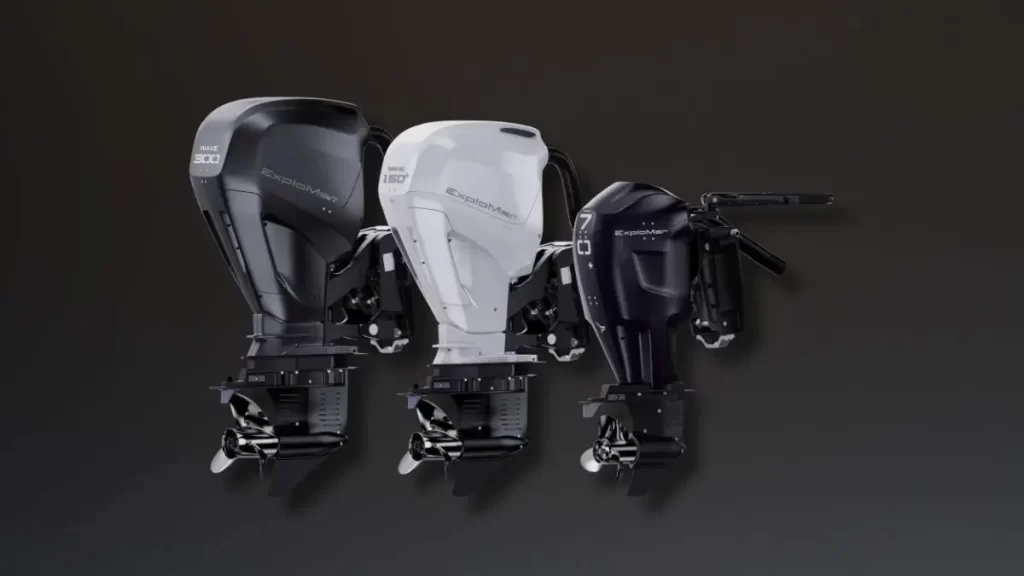
An electric boat motor converts electrical energy into mechanical propulsion through an integrated motor, battery pack, and control unit. The battery supplies power, the motor drives the propeller, and the controller governs torque and power output — forming the foundation of modern marine electric propulsion. Properly sized outboard engine battery capacity paired with a large battery bank can deliver long duty cycles for commercial routes.
Motor:
As the heart of boat electric motors, the motor converts electricity into powerful propulsion. Most outboard motor electric designs achieve over 90% energy conversion efficiency, minimizing wear, noise, and power loss for smoother, more reliable operation. These electric engines deliver quiet yet highly efficient performance across a wide operating range. Moreover, the use of an axial flux motor enhances power and enables compact size with outstanding torque output.
Battery Pack:
The battery serves as the energy reservoir of the marine electric propulsion system. Lithium-ion batteries are among the best choices for electric propulsion, offering high energy density and low weight. They provide several hours of cruising with minimal maintenance and excellent reliability. Compact models often feature built-in batteries for portability, whereas higher-power units connect to external packs, allowing greater range and modular expansion for commercial or long-distance use. Many operators specify a substantial battery bank to extend routes, then recharge the battery bank via dockside AC or DC fast-charging. Choosing the right outboard engine battery capacity ensures the available battery power matches mission profiles.
Control Unit:
Acting as the intelligent hub, the control circuit manages energy flow and throttle response with precision. The electronic control enable seamless, stepless speed control, translating throttle movements into instant torque delivery. Integrated Battery Management Systems monitor voltage and temperature, enhancing safety and prolonging battery life — ensuring each electric boat motor runs efficiently, reliably, and quietly on the water. Smart energy mapping keeps the system highly efficient at both low-speed manoeuvres and sustained cruise.
A boat electric motor delivers multiple advantages: it emits no exhaust gases, delivers instant torque, operates quietly—typically 55 – 68 dB compared with 78 – 92 dB for fuel engines—and requires minimal servicing due to its simple structure and absence of consumables such as oil, spark plugs or water pumps. These advantages make it compelling for many fleets to switch to electric, especially when paired with a large battery bank on workboats.
Hybrid propulsion combines electric technology with internal-combustion engines to balance environmental performance and range. These systems can typically operate in three modes:
One of the advantages of hybrid outboard motors is their flexibility and longer endurance, which can really help ease the worry of running out of power—something many of us experience with purely electric systems. They can take you further, especially in areas where charging stations aren’t easily available, and they’re a reliable backup for those longer outings. But they do come with some challenges. With two types of powertrains, they can be heavier and may require more maintenance, which can lead to higher initial and servicing costs. Plus, managing the different modes can add extra work for the crew compared to a straightforward boat motor electric setup. For vessels that must retain combustion capability, diesel power hybrid propulsion is among the most common hybrid options, enabling long-range boating while preserving quiet electric operation in no-wake or protected zones.
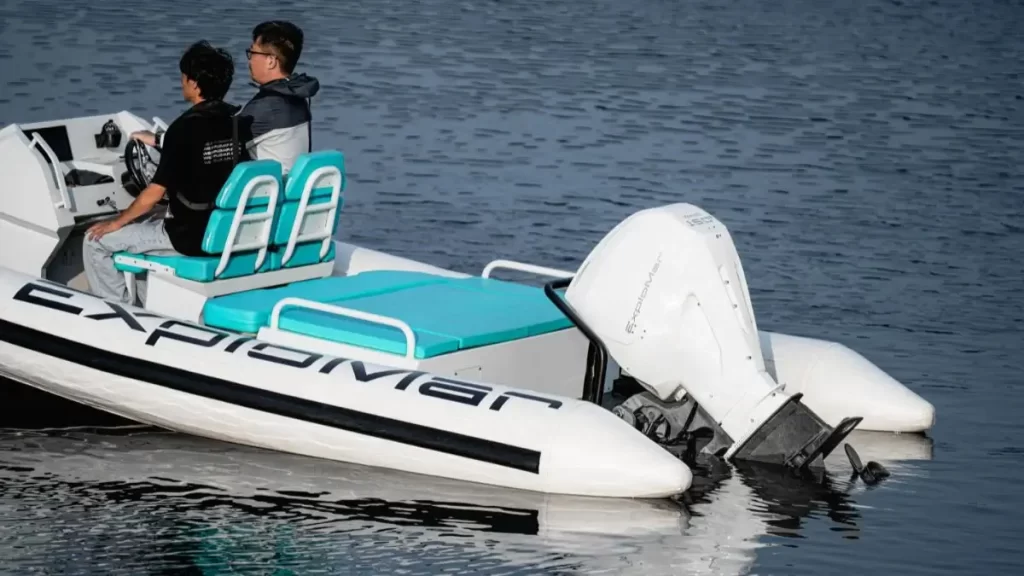
When it comes to acceleration and responsiveness, an electric boat motor has an immediate advantage. Electric propulsion delivers full torque from zero revolutions, allowing the boat to reach maximum RPM within around two seconds. This allows faster take-off, smoother throttle transitions and more precise manoeuvring—especially in crowded marinas or docking situations. ExploMar’s WAVE-series high-performance outboards build on this natural strength, using high-voltage architecture and advanced motor control to maintain performance even at high cruising speeds. With the right outboard engine battery capacity and a substantial battery bank, performance remains consistent across long shifts.
Hybrid outboards, by comparison, rely on internal combustion for extended range. While they offer flexibility between power sources, their acceleration is less direct or efficient, and the mechanical gearbox introduces delay, vibration and engine noise. In practical terms, hybrids provide acceptable cruising performance, but they cannot match the instant, linear acceleration of a powerful electric boat engine.
| Criterion | Electric boat motor | Hybrid outboard motor |
| Torque response | Instant; full torque from 0 RPM; programmable maps | Good but ICE coupling/gear shifts add latency |
| Noise & vibration | Low (≈55–75 dB deck level) | Higher under ICE drive |
| Low-speed control | Excellent; linear throttle, fine thrust steps | Good; mode-dependent behaviour |
| Sustained cruise | High with adequate cooling & capacity | Strong via ICE path; fuel-dependent |
Environmental performance is where electric propulsion clearly stands out. A boat motor electric system produces zero tailpipe emissions, no fuel odour and significantly less underwater noise. These advantages are crucial for operators in eco-tourism, inland waterways and protected marine habitats. The near-silent operation enhances passenger comfort and reduces disturbance to marine wildlife.
Hybrid systems lower emissions compared with conventional combustion engines, especially when operating in electric-only mode. However, because they still depend partly on fuel, their environmental benefit remains partial. Every hour of engine-assisted running continues to generate CO₂ and particulate matter. For operators committed to sustainability goals or compliance with future clean-air regulations, a fully electric propulsion system offers the only truly zero-emission solution. This is a key driver for fleets planning to switch to electric within the next refit cycle.
Upfront costs for an outboard motor electric setup can be higher than for traditional engines, but operating costs are dramatically lower. Electricity is cheaper than fuel, and fewer moving parts mean less maintenance and longer service intervals. In commercial use, annual operating expenses can drop by up to 90 per cent compared with petrol engines, enabling full cost recovery in as little as two years. With proper care, service life typically extends 10–15 years—twice or even three times longer than most combustion engines. Well-designed systems leverage battery power from a large battery bank to stabilise energy costs over time.
Hybrid outboards, while capable of reducing fuel bills, introduce extra expense through system complexity. The dual powertrains require more components, more weight, and more servicing. Combined with continuing fuel dependence, this makes the hybrid option a costlier long-term choice for most fleet operators.
Hybrid propulsion systems do offer flexibility: they can recharge at the dock or refuel at a conventional pump, making them suitable for remote areas without charging points. Yet, this versatility comes with the trade-off of higher complexity and noise whenever the engine engages.
By contrast, ExploMar’s high-voltage platform supports rapid DC charging, replenishing batteries in around one hour—ideal for short-turnaround commercial services. Its 5S Energy Station further enhances reliability by harnessing renewable energy such as solar, ensuring a steady supply even in off-grid or low-infrastructure environments. Together, these systems remove one of the last barriers to large-scale adoption of marine electric propulsion for fleets. Operators can quickly recharge the battery bank between trips and keep a substantial battery bank ready for peak schedules.
Hybrid propulsion systems combine the maintenance needs of both internal combustion engines and electric drives. This means regular oil changes, exhaust inspections, coolant checks, and battery diagnostics. Managing these two systems means more parts to watch, longer downtimes, and higher labour costs. This leads to increased maintenance expenses and a greater risk of failure.
On the other hand, ExploMar’s high performance outboard electric motors focus on simplicity and durability. Routine maintenance is straightforward, involving simple inspections and updates that require minimal tools. The closed cooling design protects against saltwater corrosion much better than traditional engines. The SmartCaptain system as a diagnostic continuously checks battery health and alerts users to potential issues before they affect performance. These electric motors have features like fast charging availability and better thermal management. They can reduce downtime and cut maintenance hours compared to hybrids or petrol engines. This makes them a reliable long-term choice. In short, maintaining electric engines is simpler, and the energy pathway remains highly efficient from pack to prop.
| Dimension | Electric Boat Motor | Hybrid Outboard Motor |
| Performance | Instant torque and smooth, linear acceleration;
high-speed efficiency maintained with advanced motor control. |
Slower throttle response;
relies on engine power for range; more vibration and noise at higher speeds. |
| Environmental Impact | Zero emissions, silent running and minimal disturbance to marine life;
Fully compliant with future clean-air goals. |
Lower emissions than fuel-only engines, but still produces CO₂ and noise when the engine is engaged. |
| Cost Efficiency | Higher initial cost but up to 90% lower running expenses;
Faster ROI and longer lifespan (10–15 years). |
Dual systems increase purchase and servicing costs;
Fuel use adds an ongoing expense. |
| Operational Convenience | Rapid DC charging (~1 hour) with ExploMar’s high-voltage platform;
5S Energy Station ensures renewable reliability. |
More complex and noisier to operate. |
| Maintenance | Simple routine checks;
Corrosion-resistant design; SmartCaptain diagnostics cut downtime |
Requires both ICE and electric servicing;
Higher labour time and failure risk. |
The electric boat motor is increasingly defining the future of marine mobility. Advances in solid-state lithium batteries and integrated smart features such as GPS navigation, remote diagnostics, and real-time energy management are further enhancing performance, safety and operational intelligence across the industry.
While hybrid systems will continue to serve certain transitional markets, they cannot fully eliminate emissions or escape the maintenance burden of dual powertrains. As environmental regulations tighten across the UK and Europe, electric outboards have already become the preferred choice for inland lakes, protected waters and eco-tourism fleets—offering quiet operation, zero emissions and minimal upkeep for a more sustainable future. For many operators, the economics and experience now make it attractive to switch to electric, especially when a large battery bank can be rapidly replenished between missions.
ExploMar leads this transformation. Whether you operate passenger craft, workboats or leisure fleets, ExploMar’s technology ensures longer range, faster charging and lower total ownership costs. Contact ExploMar’s engineering team to explore a tailored electrification plan for your vessel.
Hybrids extend endurance where charging is limited and offer engine-on redundancy. However, they retain fuel logistics, higher maintenance and noise. If your routes are predictable and shore power is available, a well-sized electric boat motor is usually more economical, more efficient, and quieter in service compared to a hybrid. In remote areas, diesel power hybrid propulsion can be useful, but careful sizing of a substantial battery bank will reduce engine runtime.
Electric outboard motors and boat electric motors work by converting electrical energy stored in onboard batteries into mechanical energy that turns the propeller. Instead of using fuel combustion like traditional petrol or diesel engines, they rely on an electric motor, battery pack, and controller to deliver smooth, instant power in marine applications.
Here’s a breakdown of how this marine electric propulsion system works:
Because electric outboards produce full torque from zero RPM, they accelerate quickly and operate almost silently, with no exhaust, no oil changes, and minimal maintenance. The system’s simplicity and high efficiency make marine electric propulsion an increasingly popular choice for both recreational and commercial boats. Between trips, operators can quickly recharge the battery bank to keep schedules on time.
ExploMar’s electric boat motor systems use advanced lithium batteries. Lithium is the lightest metal on the periodic table and an excellent choice for marine electric propulsion. These batteries ensure safety, boast a high energy storage capacity, and offer a long cycle life—supporting reliable, high-performance operation for every powerful electric boat engine in ExploMar’s range. The recommended outboard engine battery capacity depends on route length and duty cycle; many commercial boats opt for a substantial battery bank for operational resilience.