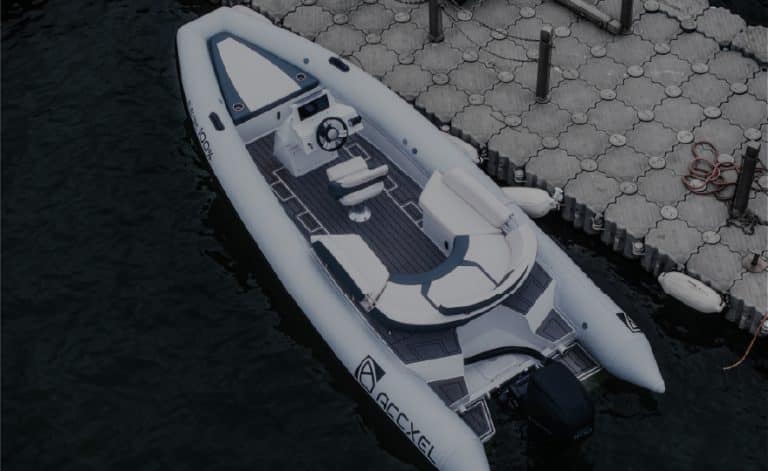

If you’re choosing a new engine, 150 hp is often the sweet spot for modern boats. It provides enough power to handle strong currents and changing conditions, without the excess weight, cost, or energy demand of larger motors.
As electric propulsion becomes the new trend, 150hp is an ideal entry point into high-performance electric outboards. Today’s 150hp electric outboards deliver instant torque, smooth control, and performance that rivals traditional combustion engines—making them a practical, future-ready choice for many boats.
In this guide, we will break down exactly which vessels pair best with a 150HP outboard and help you decide if it is time to pick a 150HP electric outboard motor.
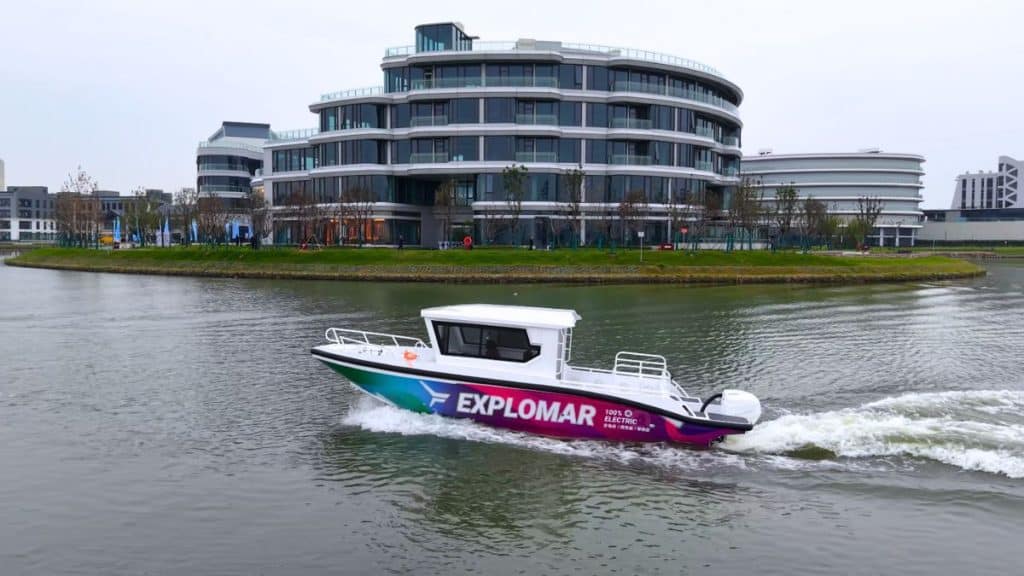
The first thing you will notice is the silence. Especially for anglers, the stealth is invaluable. You can approach a feeding shoal without the distinct vibration of a petrol engine spooking the fish.
Beyond the quiet, there is the performance. An electric outboard motor delivers instant torque. There is no waiting for RPMs to build up. When you push the throttle, the power is there immediately. This is especially helpful for quickly charging a boat, which can be a struggle for some heavier hulls with traditional petrol engines.
Furthermore, maintenance is virtually non-existent compared to traditional engines. No oil changes, no fuel filters, no spark plugs, and no winterising the fuel system. For the recreational boater who just wants to get on the water on a sunny Saturday, this reliability is priceless.
Read More: The Electric Boat and Outboard Boat
It’s an ongoing debate: is it really time to switch to electric? Petrol outboards have been the standard for over a century, valued for their familiar refuelling routine and range that’s limited only by tank size. When fuel runs low, a quick stop at the marina and you’re back on the water in minutes.
Yet this convenience comes with compromises. Petrol engines bring constant vibration, noise, and a cycle of regular—often messy—maintenance, from oil changes to filters and winterisation. As electric systems continue to advance rapidly, more boat owners are weighing whether these trade-offs still make sense.
For 90% of leisure boaters, an electric system is more than sufficient. You get to experience the exhilarating instant torque of an electric outboard. It truly feels like driving a high-performance electric car on water, with near-silent operation that lets you enjoy the natural soundtrack of the sea.
You also need to factor in the total cost of ownership. While the initial outlay for a high-performance electric system and its corresponding battery bank might be higher than a comparable petrol engine, the running costs are dramatically lower. There is no more expensive petrol duty, no more frequent oil changes, and far fewer moving parts that can wear out. Over five years, the operational savings can be significant, making that 150hp electric outboard option a much smarter long-term investment, especially considering the longevity of modern lithium batteries.
Here is a quick comparison to visualise the difference:
| Feature | 150HP Electric Outboard | 150HP Petrol Outboard |
| Torque Delivery | Instant, high torque from 0 RPM. | Linear, builds with RPM. |
| Noise & Vibration | Near silent; minimal vibration. | Loud at high revs; constant vibration. |
| Maintenance Costs | Low (few moving parts). | Moderate to High (oil, filters, servicing). |
| Fuel/Energy Cost | Low (electricity is cheaper than petrol). | High (fluctuating petrol prices). |
Read More: Hybrid vs. Electric Boat Motor: Which Outboard is Better?
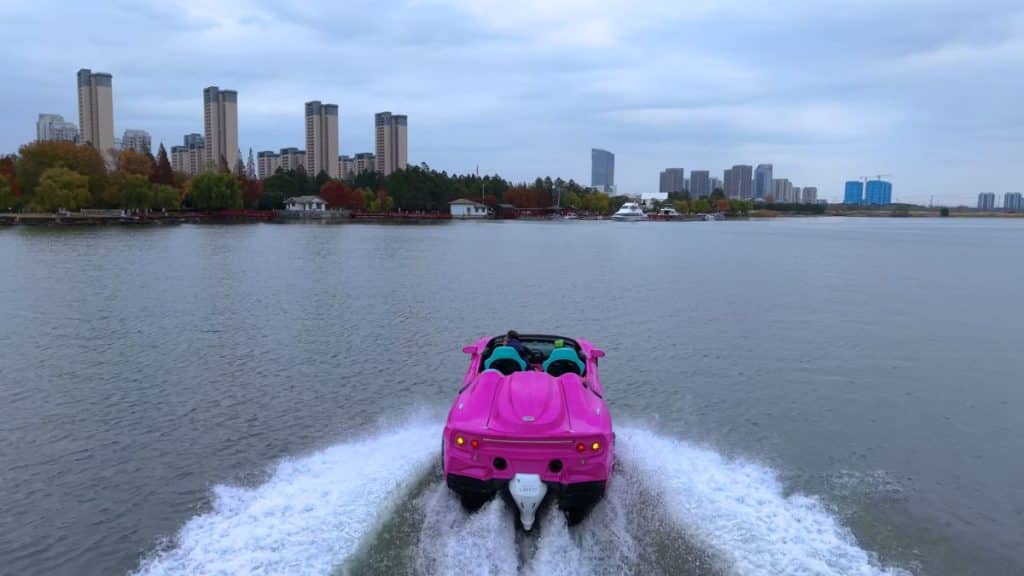
If you enjoy fishing in coastal estuaries or shallow bays, a bay boat is likely your weapon of choice. These vessels typically have a lower freeboard and a shallower draft. A 150hp motor is often the maximum rating for these boats, making it the high-performance option.
Because bay boats are designed to be relatively lightweight to float in skinny water, strapping a 150HP engine on the back turns them into rockets. You can get to your fishing spot before anyone else. If you opt for an electric outboard here, the silent operation becomes a massive tactical advantage when stalking fish in shallow, clear water.
The centre console is the SUV of the sea. They are popular for their utility. You can fish from them, tow a wakeboarder, or just cruise to a beach for a picnic. A 150HP motor is the standard propulsion for centre consoles in the 5.5 to 6.5-metre range.
With a centre console, the weight balance is crucial. A 150HP electric outboard provides enough power to handle choppy coastal waters without weighing down the stern excessively. If you are loading the boat with four divers and their gear, the 150HP gives you the necessary grunt to plane comfortably without straining the engine.
Bowriders are the quintessential family day boats. They maximise seating space by opening up the bow area. For a bowrider between 5.5 and 7 metres, a 150HP outboard is ideal. It provides enough speed to tow water skiers or tubes, which is often a primary requirement for this boat class.
One thing to consider here is the social aspect. In a bowrider, your passengers are sitting close to the stern. A loud petrol engine can make conversation difficult. This is where electric motors boats really excel; you can actually hear your children laughing or the music playing while you cruise.
Traditionally, “jet boats” use inboard engines with jet drives. However, we are seeing a trend of “jet-style” hulls being rigged with outboards for better fuel efficiency and easier maintenance. A 150HP outboard on a shallow-draft, agile hull can mimic the excitement of a jet boat but with better low-speed manoeuvrability.
While a true jet drive has no propeller, an outboard-powered sport boat in this class offers a similar adrenaline rush. The 150HP allows for sharp turns and rapid acceleration, perfect for thrill-seekers who want the outboard reliability.
For those who want to spend a night aboard, a small cuddy cabin or pocket cruiser is the answer. These boats are heavier than open boats due to the fibreglass structure of the cabin and the added amenities (berths, perhaps a small galley).
A 150HP motor is often the minimum entry requirement here. You need the torque to push that extra weight. If you are looking at a high-performance electric outboard for a cabin cruiser, ensure you calculate your battery capacity carefully. The added weight of the hull plus the batteries means you need a system designed for efficiency to ensure you have the range for a weekend getaway.
Distinct from the larger family bowriders, these are the smaller, sportier runabouts—think 5 to 5.5 metres. On a boat this light, a 150HP engine is bordering on “overpowered” in the best possible way. It transforms a sedate runabout into a high-speed machine capable of speeds exceeding 45 knots.
You must be careful with weight distribution here. A heavy older four-stroke might make the boat sit low in the stern. Modern electric outboards can actually help here if the batteries are distributed forward in the hull, balancing the boat better than a heavy fuel tank and engine block both sitting at the back.
| Boat Type | Length (Metres) | Approx. Top Speed (Knots) | Suitability Rating |
| Bass/Bay Boat | 5.5 – 6.0m | 45 – 55 | Excellent |
| Centre Console | 6.0 – 7.0m | 35 – 45 | Ideal |
| Cabin Cruiser | 6.5 – 7.5m | 25 – 32 | Adequate/Moderate |
| Pontoon Boat | 6.0 – 7.5m | 25 – 35 | Good |
Selecting the right hull to pair with a 150HP electric outboard requires a different approach than choosing one for a traditional petrol engine. The immediate, high torque delivery of an electric motor, coupled with the weight and placement of the battery system, introduces new parameters you must consider to maximise performance and range. Here is a focused checklist for pairing your vessel with this cutting-edge propulsion.
A lot of factors depend on the hull efficiency. Highly efficient hull designs, like those found in performance V-hulls, require less horsepower to achieve the same speed, meaning a 150HP electric outboard will feel more powerful and deliver significantly better range. When assessing suitability, the first step is calculation:
For boat owners looking to tow water skiers and wakeboarders, the torque profile of the engine is paramount. The 150HP electric outboard excels here because it delivers maximum, instant torque even at low RPMs, offering the powerful “hole shot” needed to pull a skier out of the water quickly and smoothly. Unlike petrol engines that need to rev up, the electric motor’s immediate thrust is a distinct advantage for watersports.
This is arguably the most critical factor for any electric power plant. Unlike a petrol engine, the weight of the lithium battery bank for a 150HP electric outboard can equal or exceed the weight of the motor itself. When evaluating a potential boat:
If you are leaning towards the future and want a 150HP outboard that combines raw power with silence and sustainability, you need to look at what ExploMar is achieving. Our technology is pushing the boundaries of what you thought possible with electric motor boats, offering a seamless transition for those ready to leave petrol fumes behind. Contact us to try the latest electric outboard.
A 150 hp system is recommended for most 6–8 m boats that need a balanced combination of speed, efficiency, and control. ExploMar’s 150+ HP electric outboard delivers strong torque, quiet operation, and low running costs, making it a reliable choice for leisure, commercial, and tourism use without the higher energy demand of larger motors.
With the right hull, a 150 hp electric outboard such as ExploMar’s 150+ HP system can reach 28–35 knots. Lighter RIBs may go slightly faster. Electric torque improves acceleration, so real-world performance often matches or exceeds petrol 150 hp engines.
Yes—this is usually a straightforward retrofit.
Modern electric outboards are built to match standard transom bolt patterns (BIA standard), so the motor installation itself is simple. Battery placement is also quite manageable. Removing the fuel tank typically frees up space and weight capacity, making room for the battery system. The batteries can then be positioned to keep the boat well balanced and maintain its centre of gravity, especially when the SUPERISLAND battery of ExploMar is 710(Width) × 300(Height) mm is standard and modular. Besides, ExploMar’s after sales team will provide the installation support and technican training for optimal performance and safety.
Calm Seas Yachting. (2025, January 20). Choosing the right outboard motor for your center console. Retrieved December 3, 2025, from https://www.calmseasyachting.com/post/choosing-the-right-outboard-motor-for-your-center-console
GetBoat.com. (2025, August 12). Best 150HP electric outboard motors – Top picks & reviews. Retrieved December 3, 2025, from https://blog.getboat.com/travel-tips-advice/best-150hp-electric-outboard-motors/
Discover Boating. (n.d.). Boat Hull Types, Shapes & Designs. Retrieved December 3, 2025, from https://www.discoverboating.com/resources/boat-hull-types
Haines Hunter. (n.d.). What size outboard motor should I choose for my Haines Hunter? Retrieved December 3, 2025, from https://www.haineshunter.co.nz/support/what-size-outboard-motor-should-i-choose-for-my-haines-hunter/
UPCommons. (2025). Study of pure electric propulsion system and design of the system for a 6 m hull already permited. Retrieved December 3, 2025, from https://upcommons.upc.edu/bitstreams/459a7e5e-48bc-422a-a8fc-b3c48af961f6/download