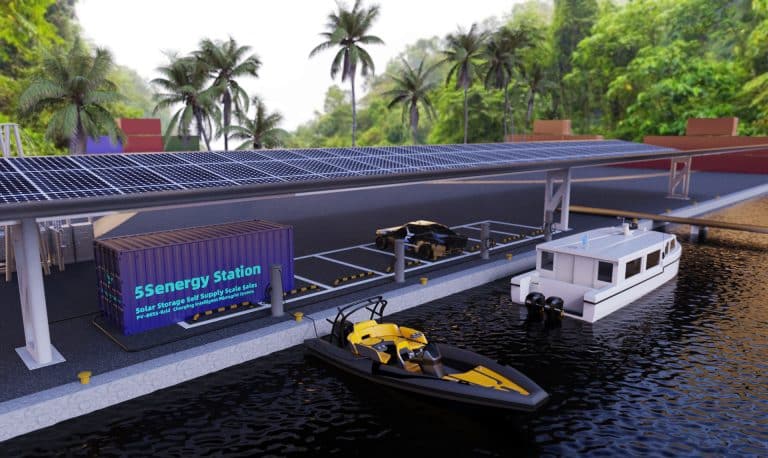

Electric propulsion is transforming the marine industry. From small tenders to commercial vessels, electric outboard motors are becoming an increasingly attractive alternative to traditional fuel engines. However, while battery technology and electric propulsion systems continue to improve, one factor remains absolutely critical to the success of electric boats: charging infrastructure.
Just as charging networks enabled the rapid adoption of electric vehicles on land, reliable charging solutions will determine how quickly the marine industry transitions toward electrification. Without efficient, accessible, and standardized charging systems, electric boats risk remaining a niche technology rather than a mainstream solution.
Understanding why charging is so important helps explain the future direction of electric boating.
The usability of an electric boat depends directly on how easily and reliably it can be charged.
Marine batteries typically have large capacities, designed to power boats over extended distances. At the same time, range can be heavily influenced by environmental factors such as currents, waves, wind, and vessel load. Unlike cars that operate on predictable roads, boats must deal with changing water conditions that can significantly affect energy consumption.
Because of this, reliable charging access is essential.
If charging solutions are slow, incompatible, or difficult to access, electric boats become far less practical to operate. Owners may experience what is commonly referred to as range anxiety—the fear that the boat may not have enough power to complete a journey or return safely.
In many cases, inadequate charging infrastructure can leave electric boats sitting idle at the dock rather than being actively used.
For electric propulsion to succeed in the marine sector, charging must be convenient, reliable, and widely available.
Charging technology also plays a crucial role in determining whether electric boats are economically competitive with traditional fuel-powered vessels.
One major factor is charging efficiency and charging speed. If batteries take many hours to recharge, vessels remain unavailable for operation during that time. This downtime can significantly reduce fleet utilization rates, which is particularly important for commercial operators such as ferry services, tourism boats, or rental fleets.
Faster charging reduces downtime and allows boats to return to operation more quickly.
Another economic challenge arises when charging speeds are too slow. Operators may compensate by installing larger or multiple battery packs, increasing both vessel weight and initial investment costs.
In addition, when shore-side charging systems are not standardized, each marina or dock may require specific modifications. This creates additional installation costs and operational complexity.
Efficient and standardized charging solutions therefore play a key role in ensuring electric boats remain cost-effective and competitive.
The growth of electric boating depends on the availability of reliable charging infrastructure.
Boat owners are unlikely to invest in electric propulsion if they cannot easily recharge their vessels. At the same time, shipyards may hesitate to produce electric boats if there is limited charging infrastructure available. Marina operators may also be reluctant to upgrade their facilities without clear demand.
This situation creates a classic infrastructure challenge.
Charging networks serve as the foundation of the electric marine ecosystem, much like highways and fueling stations support traditional transportation systems.
Standardized charging protocols allow boats, batteries, and shore infrastructure to work together seamlessly. Once interoperability is established across the industry, electric boats can operate more freely between different ports and marinas.
This level of compatibility is essential for scaling marine electrification globally.
To support the transition to electric boating, the industry must move beyond individual components and toward integrated systems.
Instead of viewing the electric outboard motor as a standalone product, successful electrification requires coordination between several key elements:
By integrating these components into a unified ecosystem, electric boat systems can operate more efficiently and reliably.
Smart communication between onboard battery management systems (BMS) and shore-based chargers enables optimized charging speeds, enhanced safety, and improved system monitoring. This level of integration helps ensure that charging processes are both efficient and secure.
A holistic approach to electrification allows electric boats to operate within a broader energy network rather than relying on isolated solutions.
When discussing battery charging performance, one important concept is the C-rate.
The C-rate measures how quickly a battery can be charged or discharged relative to its total capacity. In simple terms, it describes the relationship between charging power and battery size.
For example, consider a battery with a capacity of 100 kWh:
Higher C-rates allow boats to recharge more quickly, minimizing downtime between trips. Fast-charging capabilities are therefore highly valuable for both recreational and commercial operators.
ExploMar electric outboard systems are built on a high-voltage platform designed to address one of the key concerns of electric boating—charging infrastructure and turnaround time. The system supports flexible charging solutions, including standard 7 kW charging for convenient marina or overnight use, as well as 40 kW and 120 kW fast-charging options for rapid energy replenishment. Paired with the SuperIsland 60 kWh and 90 kWh battery packs, both supporting 1C fast charging, vessels can recharge efficiently and return to operation quickly—making the solution especially suitable for demanding commercial applications and high-frequency water mobility.
One of the most promising developments in electric boating is the ability to utilize existing electric vehicle charging infrastructure.
Around the world, EV charging stations are expanding rapidly as electric cars become more common. By adopting compatible charging protocols, electric boats can take advantage of this growing network.
This compatibility offers several major benefits:
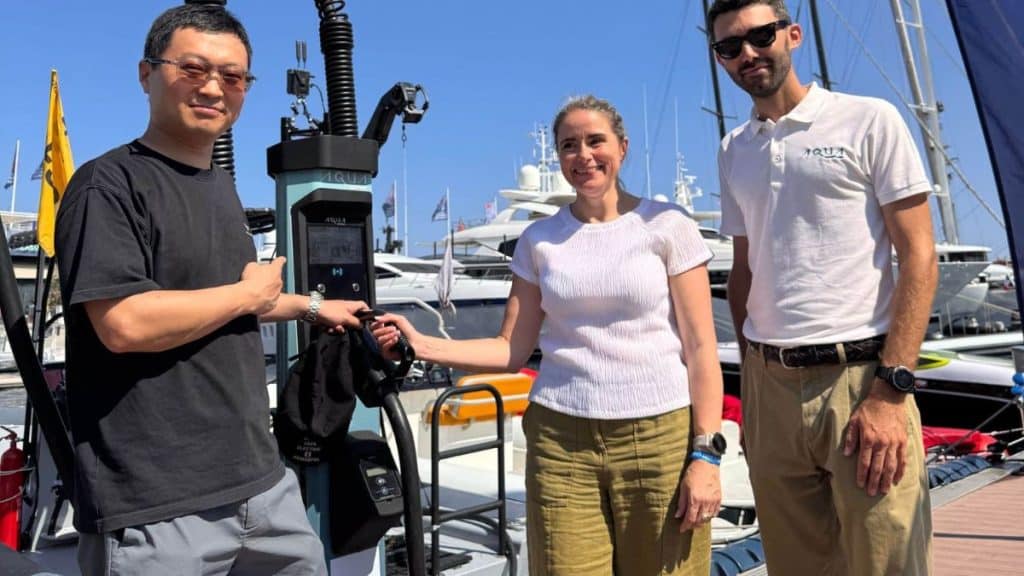
ExploMar electric outboard systems are built on the same high-voltage platform commonly used in modern EV cars, enabling seamless compatibility with existing charging infrastructure. By adopting standardized EV interfaces, the boats with ExploMar’s electric outboard systems can be easily charged at widely available EV charging points, reducing range anxiety and simplifying the transition to electric boating. This approach leverages the rapidly expanding global EV network, making electric water mobility more convenient, accessible, and future-ready.
The rapid rise of electric vehicles demonstrates how quickly a transportation sector can transition when charging infrastructure becomes widely available.
Today, charging stations are appearing in cities, highways, commercial centers, and residential areas around the world. The marine sector is beginning to follow a similar trajectory.
More marinas and coastal facilities are installing charging equipment to accommodate electric vessels. Governments and port authorities are also increasingly supporting electrification initiatives to reduce emissions and improve environmental sustainability.
As more marinas and coastal facilities install charging equipment for electric vessels, and governments and port authorities increasingly support electrification initiatives to reduce emissions and enhance environmental sustainability, reliable charging infrastructure becomes essential. That’s why ExploMar collaborates closely with Aqua Superpower, ensuring seamless integration of our electric outboard systems with fast-charging networks. By aligning our high-voltage platform with Aqua Superpower’s advanced charging solutions, we make it easier for vessels to access dependable and efficient charging. This growing infrastructure is set to play a crucial role in establishing electric propulsion as a standard choice for both recreational and commercial vessels.
While urban marinas may benefit from strong grid connections, many coastal regions and islands face significant energy challenges.
Remote locations often experience:
These challenges can make charging electric boats difficult.
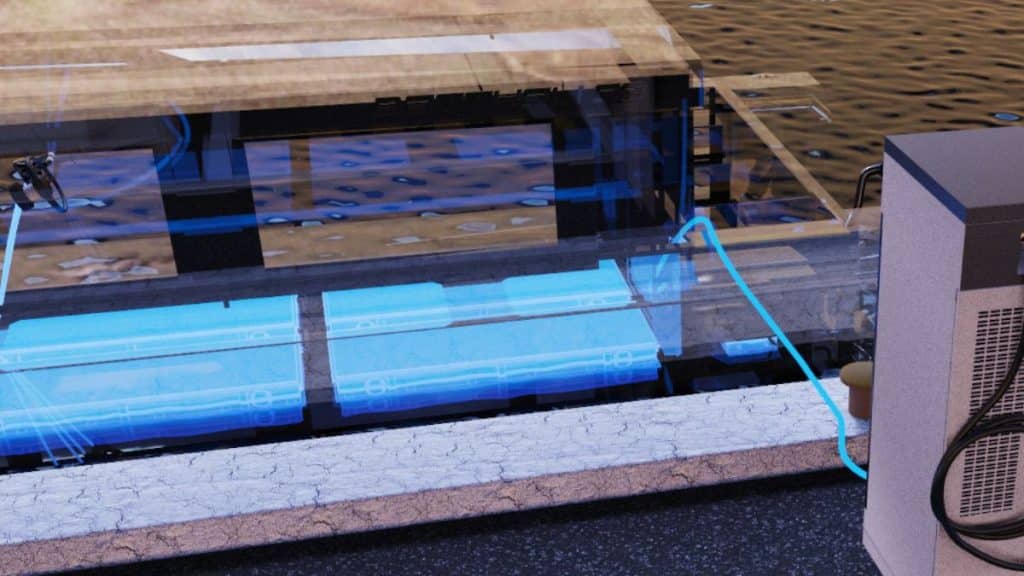
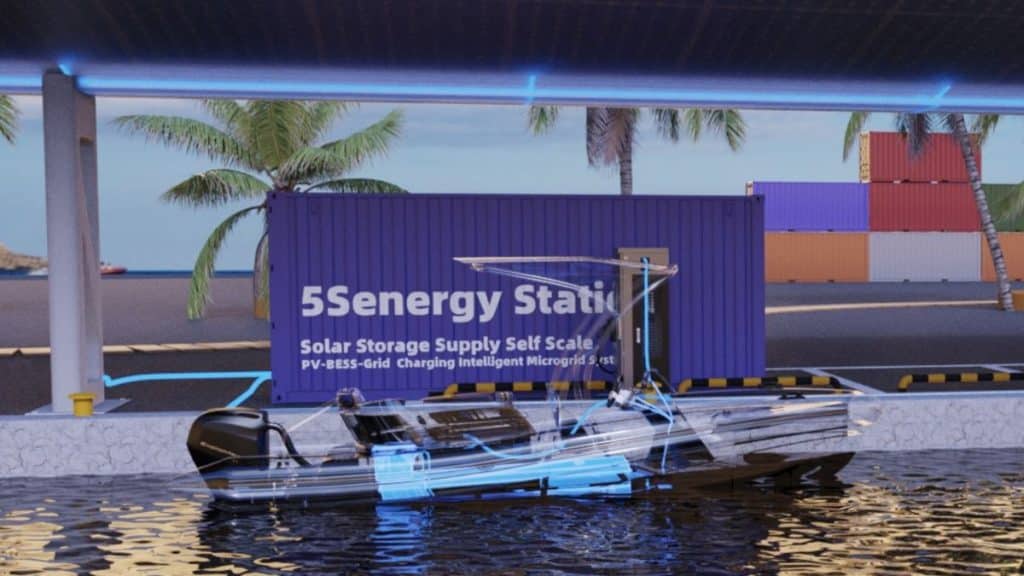
To address these issues, ExploMar has developed the 5S Energy Station—a modular, portable, and corrosion-resistant system that combines solar power, energy storage, and fast-charging capabilities. With up to 300 kW solar generation and flexible deployment, the 5S station enables independent, rapid, and sustainable charging for electric vessels anywhere, even in areas where conventional power networks are limited.
Charging technology is rapidly shaping the evolution of electric boating, driven by key trends such as the increasing adoption of fast-charging solutions, standardization of charging protocols, expansion of marina and coastal infrastructure, and integration of electric vessels with broader energy networks. As these developments advance, electric propulsion becomes more practical, accessible, and economically viable across a wide range of marine applications. The shift to electric boats goes beyond simply replacing fuel engines with batteries—it is about creating a complete ecosystem that enables clean, efficient, and reliable marine mobility. At the heart of this transformation, charging infrastructure serves as the cornerstone for widespread adoption and sustainable growth.