
This document compares the battery thermal management schemes for high-power electric outboards, and highlights exclusive advantages of ExploMar patented integrated closed cooling system applied to its full-series electric outboards.
The battery pack is equipped with built-in cold plates and internal flow channels. Ethylene glycol aqueous solution circulates in an independent closed loop. Heat exchange with seawater is realized via underwater heat exchangers of the outboard unit with complete medium isolation—coolant never contacts seawater directly. The fully sealed independent loop includes two mainstream designs: battery-independent closed circuit and integrated shared circuit for all electric components. This scheme is the standard configuration for electric outboards over 50 HP.
Brushless fans are installed inside the battery pack to dissipate heat via internal ventilation ducts. Two structural types are widely adopted:
Semi-open ventilation: Air exchange between battery compartment and external cabin atmosphere;
Fully sealed internal recirculation: Air circulates only inside the pack without external air intake.
Air cooling is mostly used for small and medium electric outboards below 20 HP.
Ultra-small cell temperature difference ensures synchronized charge-discharge attenuation, boosting overall pack cycle life by 20%–35%. Early aging and bulging of individual cells are eliminated to drastically reduce pack replacement cost;
Superior thermal runaway suppression: Cold plates rapidly conduct heat away from overheated single cells to block thermal propagation. Fire risk inside enclosed cabins is much lower than air-cooled solutions;
Non-conductive ethylene glycol coolant provides high safety margin—minor leakage will not trigger instantaneous cell short circuits.
Large temperature difference among cells causes 2× faster attenuation of edge and distal cells under long-term high temperature. Excessive monomer voltage difference emerges after 2–3 years, requiring frequent cell balancing and replacement;
Fast thermal propagation under high temperature. Blocked ducts or fan shutdown quickly trigger overheating alarms, potentially fire hazards in extreme cases.
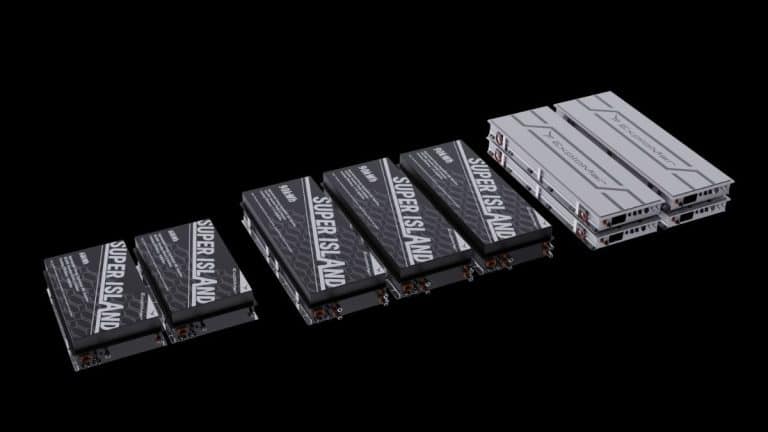
All ExploMar high-performance outboards including WAVE70+, WAVE150+ and WAVE300 series, matched with SUPER / ISLAND modular battery platforms, adopt a patented integrated three-electrical closed cooling scheme. Distinct from ordinary independent battery liquid cooling in the industry, it delivers differentiated core strengths superior to air cooling and competitors’ simplified liquid cooling solutions:
Self-developed integrated shared pipeline realizes unified heat exchange for battery, motor and controller via one underwater heat exchanger, eliminating separated heat dissipation defects of air cooling. Equipped with submerged serpentine flow channels integrated in the outboard lower unit, continuous seawater heat dissipation is available during navigation. Verified in Monaco energy boat challenge: dual 300 HP (600 HP total) units sustain full speed without power derating, while air-cooled counterparts activate thermal throttling after only 20 minutes under identical working conditions;
Axial flux motors perfectly match closed liquid cooling design. WAVE300 delivers stable continuous peak torque of 655 N·m. Air-cooled systems accumulate heat rapidly under high-rate discharge and cannot support heavy-load scenarios such as racing, passenger ferries and long-distance cruising;
Dual thermal management (liquid cooling + low-temperature heating) is integrated. Automatic temperature switching for tropical 35°C hot seawater and frigid winter waters. Air cooling lacks preheating, resulting in 20%–35% cruising range loss at low temperatures. ExploMar closed system stabilizes all cells at the optimal 25°C working temperature, compatible with global sea areas of all climates.
The entire cooling loop is independently hermetically sealed, with IP67 fully enclosed battery PACK and zero air intake vents. It completely eliminates air cooling’s pain points of sea spray/salt mist intake, duct corrosion and internal condensation short circuits. 1000-hour salt spray lab testing verifies zero performance degradation, supporting low failure rate for commercial fishing boats and offshore rental yachts with high-frequency operation;
Only external surface of underwater heat exchangers contacts seawater, with full medium isolation inside coolant loops. Double-layer titanium anti-corrosion sealing joints eliminate leakage risks common in generic liquid cooling systems. Air cooling fans and heat sinks corrode under corrosive air, with heat dissipation efficiency dropping drastically within 2 years and frequent salt scale cleaning mandatory;
No fan consumables, removing periodic maintenance of fan replacement and duct cleaning required every 2–3 years for air cooling systems, cutting vessel downtime for commercial high-frequency operation.
Full-area parallel cold plates inside batteries limit cell temperature difference to ≤2°C, better than the industry standard of ≤3°C for ordinary liquid cooling and far superior to air cooling’s 5–12°C temperature gap. SUPER/ISLAND modular batteries achieve over 3000 charge-discharge cycles with 8–10 years service life. Air-cooled batteries suffer premature failure within 1–3 years due to uneven high-temperature attenuation, incurring expensive cell replacement cost;
SmartCaptain intelligent BMS links the closed cooling system to dynamically adjust pump flow rate based on real-time temperature of cells and motors for energy-saving precise temperature control. Air cooling fans run at constant high speed regardless of load, consuming extra cruising power even during low-speed cruising;
The premium cost of integrated cooling system is fully offset within 3–4 years via zero fan replacement, fewer cell replacements and zero revenue loss from power derating. Comprehensive operation cost for passenger ferries and commercial speedboats is far lower than air cooling alternatives.
Integrated closed cooling removes independent ventilation ducts, lifting battery PACK space utilization by 30%. Air-cooled batteries require massive reserved ventilation channels, leading to bulky dimensions that occupy cabin passenger/cargo space at equal energy capacity;
Heat exchange loop is embedded inside the reducer lower unit without oversized external radiators. Combined with lightweight axial flux motors, complete units reduce weight by nearly 100 kg vs equivalent power competitors, lowering hull gravity center and improving navigation stability. Air cooling lacks integrated underwater heat exchange structures and increases overall volume & wind resistance;
Modular battery platforms support 400V / 800V high-voltage systems with maximum expandable capacity of 1080 kWh per vessel. Thermal advantages of closed cooling are amplified under large energy storage configurations, while air cooling cannot sustain continuous discharge of high-capacity battery banks.
Only silent anti-corrosion circulating pumps run in closed systems with overall operating noise below 42 dB. Air cooling high-speed fans produce over 60 dB noise under full load, with obvious fan vibration compromising riding comfort on speedboats;
Insulated anti-corrosion ethylene glycol coolant rapidly extracts heat from single overheated cells via full-area cold plates to block thermal chain reaction. Air cooling faces high thermal runaway risks once ducts clog with salt deposits. ExploMar closed cooling matches automotive-grade lithium cells with multi-layer thermal runaway protection, complying with international marine safety certification standards.
| Comparison Item | Closed-loop Liquid Cooling System | Forced Air Cooling System | Extra Benefits of ExploMar Patented Integrated Closed Cooling |
|---|---|---|---|
| Sustained Heat Dissipation Capacity | Excellent, supports long-duration full power | Poor, thermal power limitation under high load | Integrated 3-electrical heat exchange, 600 HP twin units sustain full output without thermal throttling |
| Cell Temperature Consistency | ≤3°C, excellent uniformity | 5–12°C, severe local hot spots | Full-area parallel cold plates, temperature difference ≤2°C, battery lifespan boosted by 35% |
| Anti-Salt-Mist Marine Protection | Outstanding, zero mist ingress inside pack | Poor semi-open; moderate sealed internal recirculation | IP67 fully sealed PACK, no fan consumables, 1000-hour salt spray durability |
| Battery Cycle Life | +25% lifespan extension, long replacement interval | Fast attenuation, premature monomer failure | Over 3000 cycles, 8–10 years service life, drastically reduced commercial maintenance cost |
| Thermal Runaway Safety Grade | High thermal propagation suppression | Low, easy chain overheating at high temp | Insulated coolant + BMS intelligent linkage, multi-layer safety protection |
| System Weight Gain | +8%~15% extra weight | Light, no fluid components | Heat exchanger integrated in lower unit, complete unit weight -100 kg with axial flux motor |
| Installation Space Occupation | Compact, no redundant duct space required | Bulky, large reserved ventilation channels | Zero independent ducts, battery space utilization +30% |
| Overall Operating Noise | Low, minor pump noise only | High, loud fan wind noise at full load | Operating noise <42 dB, quiet luxury yacht experience |
| Upfront Procurement Cost | Premium +25%~40% | Low cost | Integrated structure eliminates redundant parts, amortizes initial premium over lifecycle |
| Annual Maintenance Cost | Low, only regular coolant replacement | High, frequent fan & cell replacement | No fan replacement demand, minimal disassembly maintenance, less commercial downtime loss |
| Low-Temperature Preheating Function | Available, improved cold-water range | Unavailable, severe low-temp power attenuation | Intelligent dual-mode temperature control, compatible with tropical & frigid global sea areas |
| Applicable Power Range | ≥50 HP high-performance outboards, commercial fishing & offshore vessels | ≤20 HP leisure freshwater small outboards | Full power coverage 70HP~600HP, compatible with racing boats, passenger ferries & offshore yachts |
Closed liquid cooling system is the only mature reliable thermal management solution for high-power commercial and offshore electric outboards, while air cooling only meets demands of low-power intermittent freshwater crafts. The low upfront cost of air cooling is offset within 2–3 years by losses from premature battery degradation, fan replacement and power derating.
ExploMar Wave Series adopts self-developed patented integrated three-electrical closed cooling system, differentiated from generic independent battery liquid cooling solutions in the industry. Unified temperature control & heat exchange for battery, motor and controller delivers comprehensive advantages over air cooling and simplified competitor liquid cooling systems in sustained power output, offshore anti-corrosion durability, battery cycle lifespan, cabin space integration and full-lifecycle operation cost. It becomes the standardized optimal thermal management solution for medium & large high-speed electric crafts and commercial electric ferries worldwide.