
Many people assume that winter means less boating—or no boating at all.
In reality, the need for reliable electric propulsion continues throughout the winter, especially in professional and mission-critical applications.
In high-latitude and polar regions, expedition cruise ships often operate year-round. Even during winter, these vessels rely on tender boats to transfer passengers and supplies near shore or along ice edges. These boats typically run short routes but start and stop frequently, requiring propulsion systems that are immediately available and consistently stable in cold conditions.
In urban waterways, water buses and commuter boats also continue operating through winter. Across Northern Europe, North America, and inland regions, waterborne transport remains an essential part of public mobility, even during cold seasons. In these cases, delays or unstable performance caused by low temperatures directly affect daily operations, including electric outboard performance.
Scientific research vessels, inspection boats, port service craft, and environmental monitoring boats face similar requirements. For them, winter operation is not optional—it is part of the job, and the battery for electric outboard becomes a critical reliability factor.
These real-world scenarios point to a simple reality:
Winter electric boating is not about whether to operate, but how to operate reliably—for operators evaluating systems such as ExploMar electric outboard solutions.
Low temperatures affect many parts of an electric vessel, but the battery—especially the battery for electric outboard applications—remains the single most critical factor for winter usability.
As temperatures drop, electric outboard motor battery systems face several practical challenges:
If the battery cannot handle these challenges effectively, even a powerful marine electric motor and advanced controls cannot fully compensate. The result is longer waiting times, shorter trips, and reduced confidence during winter operation across the entire electric outboard system.
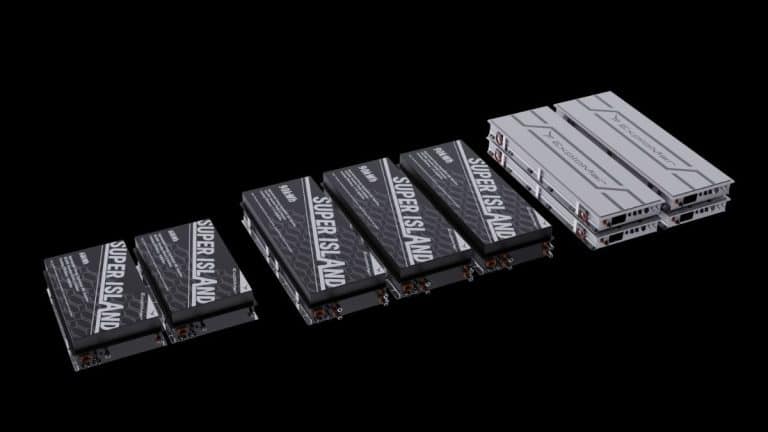
As ExploMar’sbattery platform, Super-Island is designed with winter operation in mind. The focus is not on individual specifications, but on usability, stability, and long-term reliability in low-temperature environments.
Cold-weather performance starts at the cell level.
Super-Island uses NCM622 lithium-ion cells, selected to balance energy density, safety, and low-temperature activity. This choice provides a solid foundation for winter operation.
In real-world marine applications, different battery technologies behave very differently in cold conditions. The table below summarizes their application-oriented characteristics, rather than laboratory metrics.
Battery Technology Comparison for Cold-Weather Marine Applications (Standard Version)
| Aspect | LFP Battery | NMC Battery | Semi-Solid-State Battery |
| Energy Density | Low | High | Very high |
| System Weight | Relatively heavy | Lighter | Lightest |
| Cycle Life | Very long | Medium | Shorter |
| Safety | Very high | Requires thermal management | High |
| Cost Maturity | Mature, low cost | Medium | High cost |
| Operating temperature (Discharge) | -20~55°C | -20~55°C | -30~55°C |
| Operating temperature (Charge) | 0~55°C(charging below 0°C is typically restricted) | -10~55°C | -30~55°C |
| Low-Temperature Usability | Limited, noticeable capacity loss | Good, suitable for winter use | Excellent, but limited by cost and maturity |
| Typical Applications | Mild climates, cost-sensitive use | Year-round operation, winter boating | Extreme environments, specialized use |
Note: Each battery technology has its own strengths. For electric outboard systems that must remain usable in winter, low-temperature performance, system weight, and overall maturity must be considered together.
Based on these characteristics, Super-Island allows more stored energy to remain usable in cold conditions, rather than existing only as rated capacity on paper.
Relying solely on discharge-generated heat is a common but inefficient approach in cold environments.
Super-Island integrates PTC active heating, enabling the battery to reach its optimal operating temperature quickly—without requiring high-load operation or propulsion-driven heating.
For users, this translates into:
This is especially important for winter operations involving frequent starts and short trips.
Cold-weather performance is not determined by the battery alone—it depends on how the entire electric outboard system works together.
SuperIsland operates in coordination with the Battery Management System (BMS), Thermal Management System (TMS), and SmartCaptain power control system, allowing energy flow and temperature behavior to be managed at the system level.
This coordinated approach helps to:
Winter is only one extreme operating condition. High summer temperatures also challenge battery stability and longevity.
Super-Island’s thermal management strategy addresses both ends of the temperature spectrum. By managing heat effectively in cold and hot environments alike, the system maintains stable performance throughout the year.
This means:
In real-world marine applications, winter is not an exception—it is a condition that electric propulsion outboard systems must be designed to handle.
By combining appropriate cell selection, active thermal control, and system-level energy management, Super-Island—ExploMar’s battery platform—focuses on what matters most in cold conditions: usable energy, fast readiness, and stable performance.
The result is an electric outboard solution that remains reliable not only in winter, but across seasons and operating environments worldwide.
Yes. Electric outboards can operate reliably in winter when the battery system is designed for cold conditions. With proper thermal control and system coordination, electric propulsion remains stable and usable even at low temperatures.
Cold weather mainly affects how quickly the system becomes ready and how much battery energy remains usable. Without proper temperature management, warm-up takes longer and range can feel reduced. A winter-ready battery system minimizes these effects and keeps performance predictable.
Fast warm-up allows the system to deliver stable power soon after startup. It also reduces stress on the battery during cold starts, helping maintain long-term performance and reliability.
No. Winter performance depends on how the entire electric outboard system works together. Battery behavior, motor efficiency, power electronics, and thermal management all contribute to stable operation in cold conditions.
Not at all. Near-freezing temperatures, humidity, wind, and frequent temperature changes are common in winter boating environments worldwide. The same challenges apply across North America, Asia, and other cold-season operating regions.