
Are you hesitating about whether to stop using your bustling fuel outboard motor that always scares fish away? If you’re thinking about making a switch to an electric outboard system or are just curious about this technology, you’re in the right place. This guide to the ExploMar electric outboard system will give you a friendly overview of what electric boat engines are and how a modern marine electric motor works.
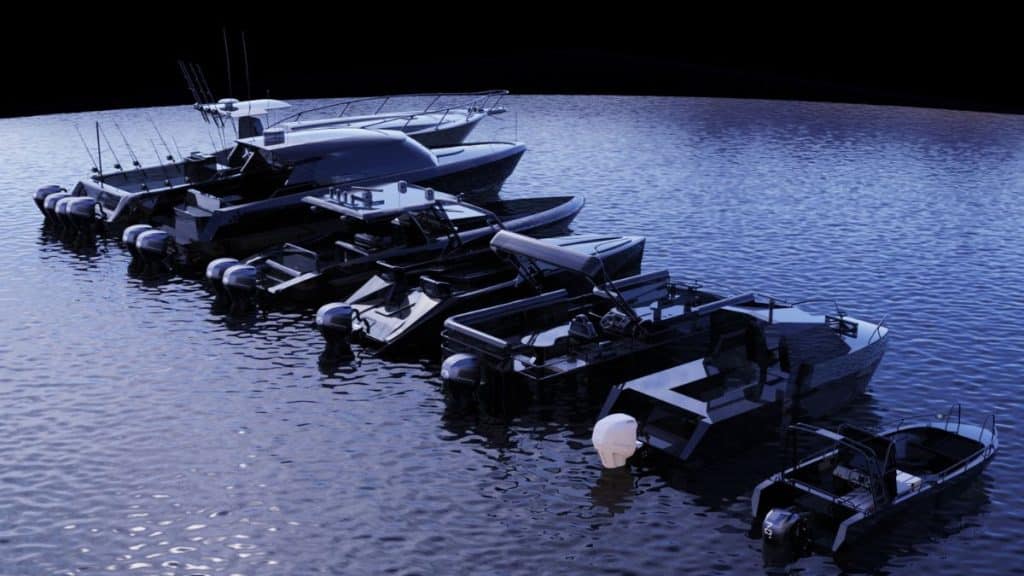
Electric propulsion is transforming the water. What once felt experimental is now becoming the preferred choice for more and more boat owners worldwide. Thanks to rapid advancements in technology, the modern electric outboard system has evolved into a powerful, reliable, and efficient solution for everyday boating.
With next-generation innovations like ExploMar’s high-performance electric outboard engine, going electric is no longer about trade-offs—it’s about unlocking better performance, lower noise, and smarter energy use. From fishing skiffs to commercial RIBs, operators are experiencing instant torque, smooth acceleration, and quiet operation that enhances comfort and improves productivity on the water.
The newest electric outboard system proves that clean propulsion and high capability are not opposing goals. They’re the new standard for a faster, quieter, and more sustainable boating future.
An electric outboard systemis a coordinated assembly that converts stored electrical energy into thrust and controllable power. It includes four key components:
Many people still think an electric outboard system is simply the electric outboard engine—the powerhead, shaft, and lower leg. In essence, the motor is indeed the heart of the high power electric outboard system. The marine electric motor converts all that stored energy into clean, instant torque. But at ExploMar, we go further: every part of the electric boat engine is redesigned with an electronics-first mindset to deliver higher efficiency, smarter control, and better performance.
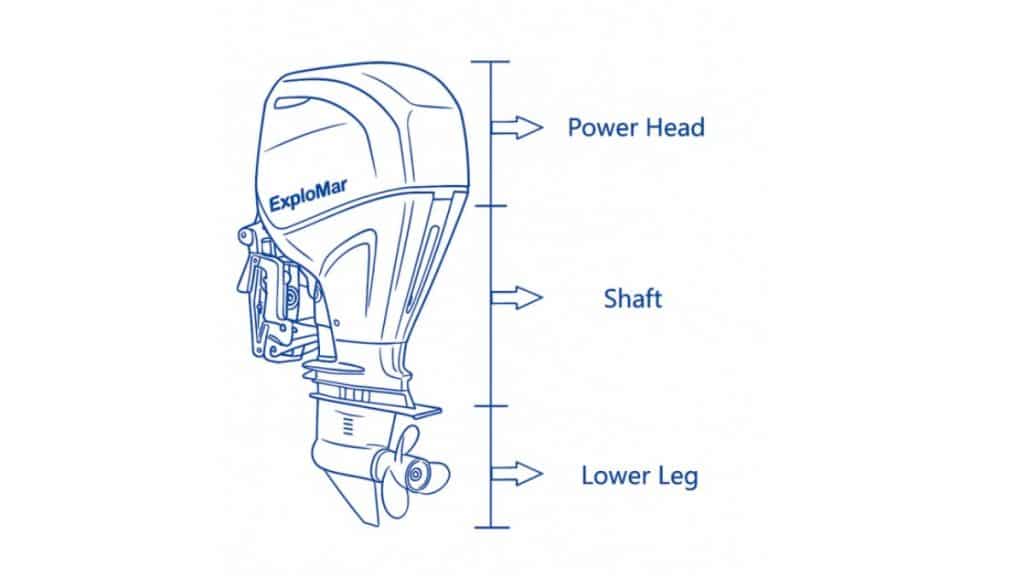
1. Powerhead
This houses the electric motor and controller. ExploMar firstly apply axial flux motor for marine electric motor for higher torque and instant acceleration. Our control architecture is optimized from an electronic systems perspective—not adapted from combustion design.
2. Shaft
Connecting the powerhead to the lower unit, the shaft carries the drive shaft and electrical cabling. Designed with precision alignment and efficient energy transmission, it ensures smooth, stable performance at high speed for a high-power electric outboard.
3. Lower Leg
This section includes the propeller and, depending on design, reduction gearing or cooling. Its hydrodynamics and materials directly affect efficiency and range. ExploMar completely redesigns the lower leg to match electric torque characteristics, including a simplified gearbox with no clutchfor higher reliability and fewer moving parts. We also adopt a closed cooling system to improve thermal stability and durability, especially in harsh or shallow-water environments. Together, these upgrades significantly enhance the overall efficiency and performance of the electric outboard system.
This is the heart of your electric Most modern setups use lithium-ion or lithium iron phosphate (LiFePO₄) cells because they deliver high energy with far less weight. You’ll find them arranged into modular packs with a Battery Management System (BMS) that keeps voltage balanced, prevents overheating, and protects against overcharging. You can scale the system and add another pack to get a longer range. Correctly matched packs let your electric outboard systemfeed the electric outboard engine efficiently at cruising and sprint speeds.
Now, this is the system’s brain. The controller converts DC power from the battery into AC power for the motor and precisely manages torque, throttle response, and efficiency. Some advanced setups even talk to your battery over CAN bus, fine-tuning efficiency. A well-tuned inverter lets a marine electric motorin a high-power electric outboard deliver punch without wasting energy.
Includes shore charging connections, onboard DC-DC converters, and fast-charging options compatible with marine charging standards. Intelligent power management integrates monitoring displays, safety interlocks, and, in some cases, remote connectivity for diagnostics and system updates. A robust interface ensures your electric outboard systemis ready for the next run.
Everything begins with the battery. It’s your boat’s fuel tank, except it stores energy in lithium cells instead of petrol fumes. Once charged, it’s ready to feed power directly into the motor system whenever you twist the throttle. Well-matched packs let the electric outboard system deliver steady current to the electric outboard engine without voltage sag.

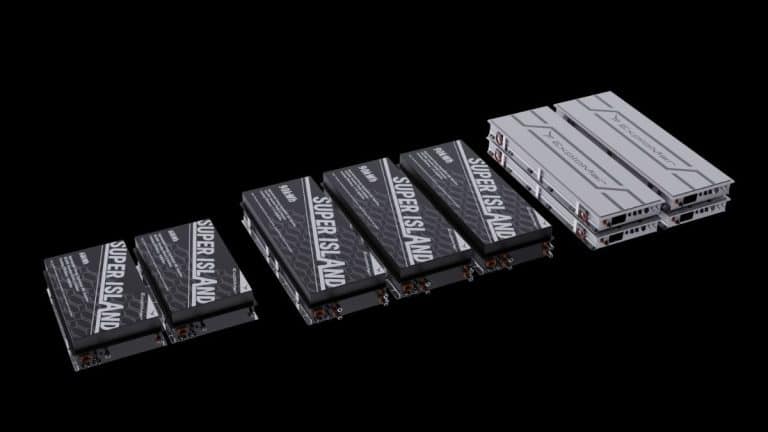
ExploMar’s modular design is clever. There are two series of batteries designed for our electric outboard: Super/Island (SI) and HEDB.
The SI series gives you modular building blocks. There are two voltage platform modular pack. One is 400 voltage SI-60; the other is 800 voltage SI-90. You can start with one SI-60 pack for 60kWh and two packs for 120kWh to pair with WAVE70+ or one pack SI-90 for 90kWh and expand up to two and three packs e 90 kWh packs for serious range. That means you can right-size your setup instead of overbuilding it. Smaller fishing boats get away with a single pack; commercial skippers who need all-day runtime can simply slot in more. The SI platform pairs neatly with a marine electric motor in the 70–150 hp class, making an efficient, quiet electric boat engine package.
If you’re running a high-performance vessel or heading into colder waters, ExploMar’s HEDB battery is the next-level upgrade. It’s a semi-solid-state powerhouse built for endurance — packing a massive 240 kWh capacity with an ultra-high energy density of 240 Wh/kg. It’s ideal for commercial charters, research boats, or cold-weather expeditions that demand both range and resilience. With HEDB you unlock sustained output for a high-power electric outboard without compromising longevity.
Every battery pack comes with its own Battery Management System (BMS). You can think of it as a vigilant first mate that keeps an eye on temperature, voltage, and charge balance. It steps in before anything overheats or overcharges. The BMS feeds data to your onboard screen — so if a cell runs hot or a pack gets too low, you’ll know long before there’s trouble. A robust BMS preserves cell health and lets the electric boat engine pull hard when you need it.
Once power leaves the batteries, it flows through the outboard with the help of ExploMar’s Smart Captain System — the real brain of your setup. This system decides exactly how your outboard motor operates.
This system offers an integrated solution with over 200 diagnostic capabilities, giving you immediate insight into battery status, motor torque/speed, temperature and performance metrics. It enables distributed control when twin or quad outboards are used, coordinating thrust and manoeuvres seamlessly. Steering, trim, throttle and tilt commands all feed into a unified helm interface rather than separate controls. In a multi-engine arrangement, the electric outboard system synchronises each marine electric motor so the boat tracks straight and accelerates cleanly.
The cooling system helps maintain full output without “derating”, so your motor can run continuously for long trips — especially important in commercial-class units from 70 kW up to 200 kW.
ExploMar employs a closed-loop liquid cooling system optimised for marine environments. In tandem with the dual thermal management of the battery platform, it ensures both motor and battery operate within optimal temperature ranges. For example, in high-salinity or tropical waters, this ensures consistent performance without risk of overheating. Routine coolant checks and scheduled maintenance will keep your system performing at peak. For any high-power electric outboard, effective cooling preserves efficiency and extends the life of the marine electric motor.
After all that silent cruising, you’ll eventually need to top up your energy reserves — and that’s where the charging and power interface comes into play.
You plug in your boat much like an electric car. The charger connects directly to the ExploMar battery pack through a marine-grade connector. Depending on your setup, you might charge from a standard AC dock outlet or use a DC fast charger. The system is engineered to support 400 V or 800 V platforms and adjusts the input to suit the battery’s requirements. Either way, your electric outboard system gets back to work quickly.
ExploMar’s SUPER/ISLAND battery platform supports rapid charging speeds. On a high-power DC station, you could go from 20% to 80% in around an hour (actual time varies by pack size and charger). If you’re at a marina with only regular shore power, it’ll take longer, but you can still plug in overnight and wake up to a full battery. Smart charging logic helps protect battery health, balancing cell temperatures and adjusting current flow as you near full capacity. This keeps the electric boat engine package ready for daily duty.
What’s clever is how flexible it all is. ExploMar has partnered with the Aqua superPower network, which has over 59 fast-charging sites across Europe and North America, offering up to 250 kW DC power. This means that in many European marinas fitted into the network, you’re already set for high-speed charging.
The Smart Captain System ties into charging management too — letting you monitor charge progress from your helm display or remotely via a connected app. You can view real-time energy flow, temperature and even an estimated range before you set off again. It’s like having your own shore-side engineer on board, quietly running the numbers while you relax. This level of visibility is a hallmark of a mature electric outboard system.
Choosing a comprehensive electric outboard system provides an integrated ecosystem of power, control, and safety. The combination of efficient marine electric motor design, modular batteries, and intelligent systems in ExploMar’s electric outboard makes it a standout leader compared to rivals. Get in touch with ExploMar today to discover how our electric outboard motors can lower emissions, elevate your time on the water, and deliver lasting savings.
If you have a small boat between 4 to 6 metres, our WAVE 70 electric outboard motor paired with one SI-60 battery provides a cruising range of about 60 to 80 kilometers.
ExploMar’s electric outboard motor ensures minimal maintenance compared with petrol engines when we simplify the design of gearbox and reduce the clutch. The electric design reduces wear and tear, increasing overall durability and extending the lifespan of the motor.
ExploMar offers a complete charging solution for its electric outboard system. Each setup supports a 7 kW onboard charger, with an optional 40 kW fast-charging station to greatly reduce turnaround time. Our platform follows the same standard as EV cars, so you can charge your boat at compatible car chargers.
ExploMar’s system also works with the Aqua SuperPower marine fast-charging network, giving boaters access to charging points across key marinas in Europe and North America.