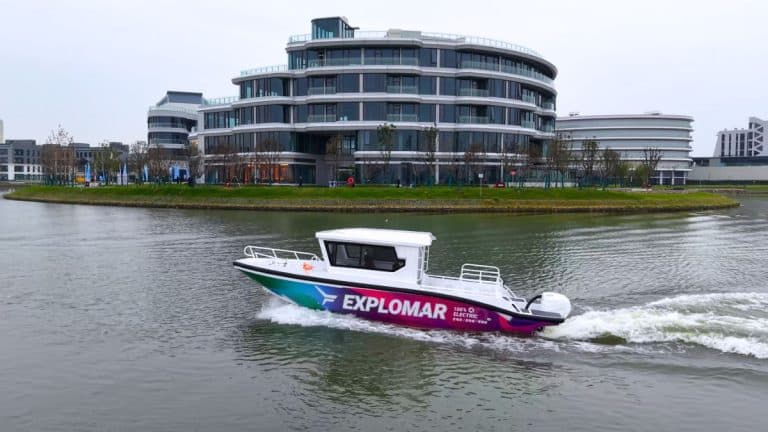

When it comes to buying an outboard for your next boat, its horsepower is what you would not forget to consider. The ideal horsepower allows your boat to offer good power, but not to the point that too much power remains underutilised or consumes a considerable amount of energy.
This guide walks you through when you need a 300hp electric motors and how to decide which 300hp electric outboard fits your boating life.
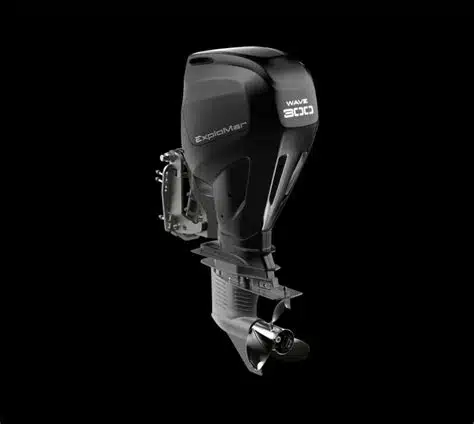
A 300 hp electric outboard sounds like great power rarely seen in daily use. So before you decide, you’d better take the following factors into consideration.
A 300hp outboard becomes most relevant when your boat is either (a) large enough to benefit from real planing power, or (b) heavy enough that a smaller outboard will feel stressed when loaded. In many cases that means boats roughly in the 6–10 m bracket, but hull design matters as much as length.
Does your boat plane easily with today’s load? If you regularly carry several adults, a diving kit, fishing gear, ice boxes, or a commercial payload, the everyday weight can creep up. That’s where a 300hp electric outboard motor can help: strong enough to lift, but not so extreme that battery requirements become unmanageable.
If your cruise is 18–28 knots, a 300hp electric outboard is often a good choice: enough to keep the boat on plane without constantly sitting on the limit, and enough headroom to accelerate when you need to adjust your position around waves or traffic.
If you genuinely cruise at 35+ knots for long stretches, your energy use rises quickly, and your battery bank needs to keep up. That doesn’t automatically mean you need more than a 300hp outboard motor. It might mean you need a better efficiency match (propeller and hull setup) or a larger battery bank. For example, a WAVE 300 SI-90*2 works well for general cruising. For extended runs, a WAVE 300 SI-90*3 setup provides extra endurance.
On calm lakes or nearshore waters, a smaller motor often handles cruising and light waves just fine. But heading offshore or tackling rough water can really test your boat. You need enough power to adjust trim, keep the bow from burying, and smoothly handle wave sets. A 300 hp electric outboard motor can help here because you can apply thrust quickly and precisely.
Commercial use, in contrast, is where a 300hp electric outboard can shine, if your duty cycle suits it. If you run predictable routes, have reliable charging at base, and value low noise and lower operating cost, the business case can be strong. It’s also easier to justify investing in proper infrastructure when the boat runs most days.
On paper, a 300hp electric outboard and a petrol 300hp outboard engine share the same headline. In practice, you’ll notice four differences.
1) Low-end punch and throttle feel. The torque of a 300hp electric outboard arrives quickly, so you often get a more immediate “push” when you roll on the throttle, especially with a loaded boat.
2) Noise. Electric propulsion can significantly reduce noise compared with combustion engines, especially at low-to-mid speeds where you spend most of your time. Less vibration and no exhaust smell is not a small upgrade if you run long days or carry paying passengers.
3) Maintenance. Electric propulsion system from ExploMar have much fewer moving parts than normal combustion engines, which can reduce routine servicing complexity.
4) Cost
In the UK, a good business electricity rate currently sits around 20–23 pence per kWh for many commercial users, with domestic tariffs not far behind. Meanwhile, average diesel pump prices hover around the £1.40 per litre mark across the UK, with some regional variation.
A conventional 300hp petrol outboard at a brisk coastal cruise might burn roughly 55 litres per hour. At £1.40 per litre, four hours of running comes in at about:
A comparable 300 hp electric boat motor drawing an average of 90 kW over those same four hours would use around:
That is a rough but realistic ratio of around one quarter of the running cost for your energy, before you factor in reduced servicing.
Real-world commercial experience backs this up. In one long-term deployment, an ExploMar electric outboard WAVE300 saved an estimated 37,000 litres of fuel — equivalent to a cost saving of nearly £24,000.
When you’re looking at a 300hp electric outboard, you’re really judging three things: how it feels at cruise, what it costs you in energy per mile, and how confidently the system manages heat, voltage, and safety limits over long runs.
Top speed and cruising efficiency are what decide whether you enjoy the boat or constantly manage it.
When you assess the performance of a 300hp electric outboard, real-world speed and efficiency matter far more than just a headline horsepower figure. In recent sea trials, boats powered by the ExploMar WAVE 300 electric outboard have demonstrated the platform’s capability in real conditions: in the Monaco Energy Boat Challenge a 6.3 m carbon RIB equipped with a WAVE 300 motor recorded top speeds around 42 knots while still completing the race with significant battery reserve, showcasing both energy efficiency and sustained performance under load.
Independent tests and user reports have even indicated peak speeds above 44 knots on similarly sized RIBs equipped with the WAVE 300 system, though exact results vary widely with hull design and sea state.
Top speed can be a factor for showing off, but cruising efficiency is what really decides whether you enjoy the boat or spend the whole trip managing energy. A 300 HP outboard on a proper planing hull can deliver impressive top-end performance and long range.
Battery sizing is one of the most critical decisions for a 300hp electric outboard. A 300hp electric outboard motor can produce serious thrust. ExploMar offers three WAVE 300 battery options: 180 kWh and 270 kWh of SuperIsland Battery and 240kWh of semi-solid battery, allowing operators to match energy capacity to intended usage.
Actual range will vary depending on hull design, sea conditions, payload, and throttle habits, but real-world tests provide practical guidance. The following figures represent the tested range of a 300hp outboard motor with 125kWh battery during a recent test with a single passenger on board. The engine was fitted with a 3-14×21 propeller. Test conditions included an air temperature of 19°C, a water temperature of 15°C, and a steady wind speed of 1.2 m/s.
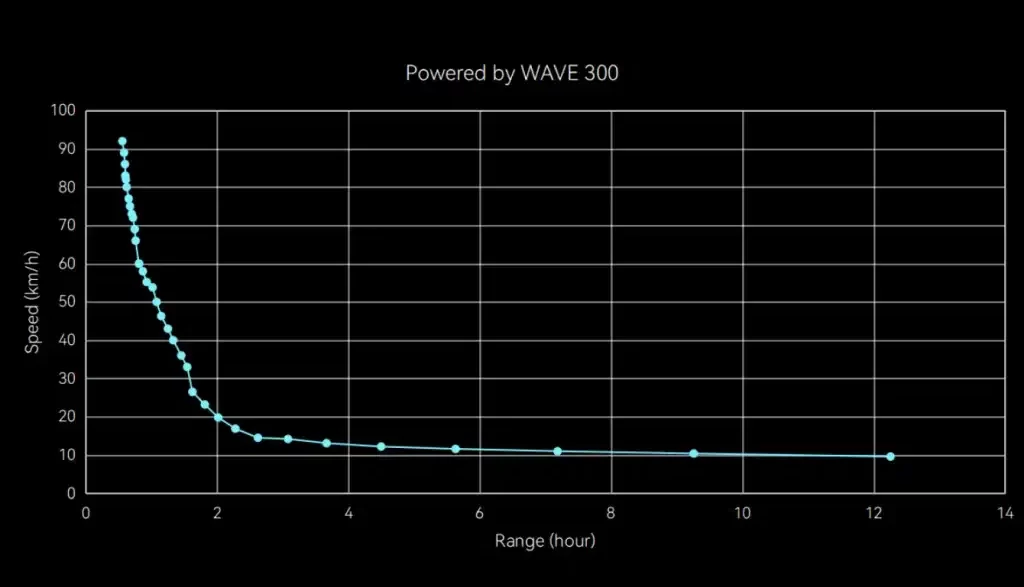
The key point is that a 300 hp electric outboard from ExploMar, supported by a correctly matched battery system, offers ample endurance for typical day-use patterns. With moderate cruising speeds and natural pauses throughout the trip, two to four hours of active propulsion is entirely achievable without pushing the system to its limits.
A 300hp electric outboard is not just a motor. It’s a system: motor, battery, power electronics, charging, and the software that keeps everything inside safe operating limits. This is where integrated setups can feel much more reassuring than a piecemeal build.
In practical terms, a good management system should help you answer simple questions instantly:
That’s why integrated packages such as ExploMar’s Smart Captain System are worth reviewing when you’re speccing a 300hp outboard motor for electric propulsion. With the management system, you can have predictable behaviour, clear alarms, and control logic that protects the battery and powertrain without surprising you at the worst moment.
A 300 hp electric outboard motor is a strong match when your boat benefits from real planing power, runs a mix of speeds, and gains value from quiet, smooth operation. If your boat is mostly displacement speed, a smaller electric outboard may deliver the same experience with less battery mass and cost.
Centre consoles and offshore fishing boats often carry a meaningful payloads: people, fuel (in traditional setups), ice, live wells, tackle, and sometimes extra electronics. They also benefit from strong mid-range control—adjusting speed around swell lines and keeping the hull comfortable.
If your offshore trips are typically out-and-back within a planned radius, and you can charge reliably at base, a 300hp electric outboard can be a compelling blend of performance and practicality. You get the punch you need to plane cleanly and the controllability that helps in rough water, without immediately jumping to the complexity of twin high-power systems.
Luxury day boats and large pontoons are often about the experience: quiet conversation, no fumes, low vibration, and confident acceleration even with a full load of guests. This is a natural use case for a 300hp electric outboard motor, because electric propulsion can turn a “comfortable” boat into one that feels effortlessly responsive.
Here’s the trick: don’t spec it like a speedboat if you’re not going to drive it like one. You’ll typically get the best ownership experience by optimising for easy cruise and steady range, then enjoying peak power only when you need it.
Workboats care about reliability, predictable operating cost, and repeatability. If your workboat runs defined routes—harbour runs, short transfers, inspection work, patrol loops—a 300hp electric outboard can be a strong fit because energy use and charging can be planned like a routine rather than a gamble.
For these boats, a 300 hp electric outboard offers the punch to plane cleanly and precise controllability in rough water. When paired with the right battery system, it’s a practical choice for day trips or planned out-and-back excursions:
If you want a clean, confident planing experience without building your entire day around extreme power demands, a 300hp electric outboard is often the best balance. It gives you the punch to carry real-world loads, the control to handle chop, and the comfort benefits that make electric propulsion feel like a genuine upgrade rather than a compromise.
In particular, the ExploMar WAVE 300 system options are a strong reference point because the published specs show clear peak and continuous ratings, and the system pages include estimated energy consumption to help you plan battery capacity and range before you commit.
Among electric outboards in the 300 hp outboard motors, the ExploMar WAVE300 is considered one of the lightest. The 300 hp outboard motor itself weighs 218kg only.
Yes. A quality 300 hp electric boat motor has torque to spare for towing duties. Because electric motors deliver maximum torque from low rpm, you get a strong, smooth pull out of the hole even with a loaded boat and a heavy rider.
Many boats in the 6–10 m range can be good candidates, but hull type matters more than length. If your boat struggles to plane cleanly when loaded, or you regularly run in chop where throttle control matters, a 300hp outboard engine class system is often the right conversation to have.
It can be, especially if you run the boat often and value comfort, low noise, and predictable energy costs. The strongest value case usually comes when your usage is frequent enough to benefit from lower day-to-day operating costs, and you can charge reliably between trips. If you only run a few short trips per year, you may find the economics harder to justify—though the experience benefits can still be attractive.
Competition and Markets Authority. (2025, September 26). CMA fuel update: Prices at the pump remain high. GOV.UK. https://www.gov.uk/government/news/cma-fuel-update-prices-at-the-pump-remain-high
ExploMar. (2025, October 27). 7 reasons electric outboard systems are the smart choice for commercial vessels. ExploMar. https://www.explomar.tech/content/7-reasons-choose-electric-outboard-systems/