
Ports, harbors, and marinas are entering a new era of cleaner and smarter operations. As the maritime industry accelerates its transition toward decarbonization, many vessels supporting daily waterfront activities are gradually moving from conventional combustion engines toward electric propulsion solutions.
Among these vessel categories, harbor, port, and marina service boats are among the most suitable applications for electrification. Their predictable operating patterns, frequent return-to-base cycles, and controlled working environments create ideal conditions for adopting electric propulsion technologies.
Beyond environmental benefits, electric outboards provide practical operational advantages, including lower maintenance requirements, improved maneuverability, reduced noise, and enhanced working conditions for crews operating every day on the water.
This article explores why electric outboards are gaining adoption among modern harbor and marina service fleets and how they are helping redefine the future of professional marine operations.
Service boats are essential work vessels that support the daily operation of maritime infrastructure. Although they often operate behind the scenes, they perform critical tasks that keep ports, marinas, and commercial waterfront facilities safe and efficient.
Depending on the facility and operational requirements, service boats may be used for:
Unlike recreational boats, service vessels usually operate according to predictable schedules. Their missions often involve repeated short-distance trips, frequent docking, low-speed maneuvering, and daily return-to-base operations.
Because of these characteristics, service boats are among the most practical vessel categories for electrification.
Not every vessel application has the same electrification potential. Long-range offshore vessels and high-energy applications may still face challenges related to battery capacity, charging infrastructure, and operational requirements.
However, harbor and marina service boats operate in environments that naturally align with the advantages of electric propulsion.
Most service boats operate within limited areas, traveling between docks, pontoons, mooring locations, and nearby work sites.
Operators usually have a clear understanding of:
This operational predictability makes battery sizing and energy planning significantly easier, helping operators select propulsion systems that match their specific working requirements.
Unlike recreational vessels designed primarily for high-speed cruising, service boats spend a significant amount of time performing low-speed operations and precision maneuvers.
Electric motors are particularly effective in these conditions because they provide instant torque and precise throttle response.
Whether approaching a dock, positioning alongside another vessel, or conducting inspection work in confined areas, electric propulsion delivers smooth and accurate control.
Many harbor and marina service boats return to the same operating base after daily missions.
This operating pattern enables convenient charging management, allowing batteries to be replenished during scheduled downtime using appropriate shore power infrastructure.
Compared with vessels requiring extensive refueling logistics, electric service boats can benefit from simpler energy management processes.
Traditional combustion engines often continue running while crews perform inspections, maintenance tasks, or operational preparations.
Electric propulsion systems significantly reduce energy consumption during stationary periods, eliminating the fuel waste associated with prolonged engine idling.
Many ports and marinas operate close to residential areas, hotels, restaurants, and public waterfront spaces.
The quiet operation of electric propulsion helps reduce noise pollution while creating a more comfortable environment for crews, operators, and visitors.
Electric outboards provide several operational advantages that are particularly valuable for professional harbor and marina applications. Beyond reducing emissions, they help operators improve efficiency, simplify maintenance, and create better working environments for crews.
Electric propulsion produces no exhaust emissions during operation, helping ports and marinas reduce their local environmental impact and support increasingly ambitious sustainability goals.
While the overall environmental footprint depends on the electricity source, electric propulsion eliminates direct exhaust emissions at the point of operation. This is particularly valuable in enclosed harbor areas where air quality directly affects workers and nearby communities.
One of the most noticeable differences between electric and combustion propulsion is the dramatic reduction in operating noise.
Without the constant engine noise associated with traditional motors, crew communication becomes easier, and waterfront environments become more comfortable for both operators and visitors.
This advantage is especially important in marinas, tourism-related waterfront areas, and customer-facing operations where a quieter experience improves overall service quality.
Electric motors deliver maximum torque from zero RPM, providing immediate power response and precise control during critical operations.
This capability is particularly beneficial for:
Improved control not only enhances efficiency but also contributes to safer vessel handling.
Service boats spend a significant proportion of their working time operating at low speeds.
Electric propulsion enables smooth speed adjustment and highly responsive control, allowing operators to perform delicate maneuvers with greater confidence.
For activities such as inspections, maintenance support, and marina assistance, precise low-speed performance is often more valuable than maximum speed capability.
Traditional combustion engines generate continuous vibration throughout vessel operation.
Electric propulsion significantly reduces mechanical vibration, creating a more comfortable working environment for crews during extended shifts.
Lower vibration levels can help reduce operator fatigue and improve the overall onboard experience.
Although environmental benefits often drive initial interest in electrification, operational efficiency and lifecycle cost savings are becoming increasingly important factors for commercial operators.
Electricity costs vary depending on region and energy source; however, electric propulsion can provide significant energy efficiency advantages compared with traditional combustion systems.
For vessels operating frequently throughout the year, improved energy efficiency can contribute to meaningful reductions in operating expenses over the vessel lifetime.
Compared with internal combustion engines, electric motors contain significantly fewer moving parts, resulting in reduced mechanical complexity and simplified maintenance.
Without combustion-related components such as fuel systems, ignition systems, and exhaust systems, electric propulsion requires fewer routine service interventions.
For direct-drive electric outboard systems, eliminating the need for components such as clutches further reduces mechanical complexity.
Routine maintenance typically focuses on:
This simplified maintenance approach helps reduce downtime and improve fleet availability.
Fewer mechanical components mean fewer potential failure points.
A simpler propulsion architecture can improve system reliability, helping operators maintain higher vessel availability and reduce unexpected maintenance events.
For commercial fleets, vessel availability directly impacts operational efficiency.
By reducing maintenance frequency and simplifying servicing procedures, electric propulsion allows operators to maximize fleet utilization while minimizing interruptions to daily operations.
Electric outboards do more than reduce maintenance requirements — they also simplify fleet operation and management.
Compared with many integrated propulsion conversion projects, electric outboards can simplify vessel upgrades by reducing mechanical complexity and offering flexible installation options. This makes them suitable for both new-build vessels and selected retrofit applications.
Electric outboard systems generally require fewer specialized maintenance procedures compared with combustion engines.
Routine servicing focuses primarily on mechanical inspection, electrical system monitoring, and software-based diagnostics rather than fuel, exhaust, or combustion system maintenance.
Advanced electric propulsion systems can integrate onboard monitoring and connectivity features, allowing operators to track:
These capabilities support predictive maintenance strategies and help reduce unexpected operational disruptions.
For operators managing multiple vessels, standardized electric propulsion systems can simplify:
As commercial fleets continue to electrify, system consistency becomes increasingly valuable for efficient fleet management.
Charging infrastructure is often one of the first considerations when operators evaluate marine electrification.
Fortunately, harbor and marina service vessels are among the most practical commercial applications for electric charging due to their predictable operating schedules.
Many service boats remain docked overnight, creating natural opportunities for battery charging.
Using appropriate shore power charging infrastructure, vessels can replenish energy during scheduled downtime and begin the next working day ready for operation.
Some service boats experience natural idle periods during the working day.
Charging during lunch breaks, shift changes, or scheduled maintenance periods can extend operating hours without requiring oversized battery systems.
For fleets requiring higher utilization, DC fast charging can provide rapid energy replenishment during short docking intervals.
This approach helps reduce downtime and supports demanding operational schedules.
Many ports and marinas already have electrical infrastructure that can support charging solutions with appropriate upgrades.
Compared with developing completely new fuel storage and distribution systems, adapting existing electrical infrastructure can simplify the transition toward electric operations.
Electrification is becoming part of a broader transformation taking place across the maritime industry. As ports and marine operators pursue cleaner, smarter, and more efficient operations, electric service vessels will play an increasingly important role in the future of waterfront infrastructure.
Ports worldwide are investing in digital technologies to improve efficiency, sustainability, and operational visibility.
Electric service vessels naturally integrate into these connected ecosystems through advanced monitoring, intelligent energy management, and data-driven fleet optimization.
By combining electric propulsion with smart port technologies, operators can achieve greater operational control while improving overall resource efficiency.
The transition to electric marine operations is also closely connected with the development of renewable energy systems.
Many ports and marinas are exploring the integration of:
These technologies can help reduce dependence on conventional energy sources while improving energy resilience and supporting long-term sustainability goals.
Over the lifetime of a vessel, electrification delivers benefits that extend beyond fuel savings.
As ports and marinas continue working toward carbon reduction targets, electric service fleets will become an increasingly important component of modern maritime infrastructure.
At ExploMar, electric propulsion is designed to meet the demanding requirements of professional marine operators.
Rather than focusing solely on motor output, ExploMar develops complete electric propulsion solutions that integrate high-performance motors, battery systems, intelligent controls, and energy management technologies.
The goal is to provide reliable, efficient, and intelligent propulsion systems that support the evolving needs of commercial marine operations.
Harbor service boats require propulsion systems capable of handling repeated starts, frequent maneuvering, and demanding daily working schedules.
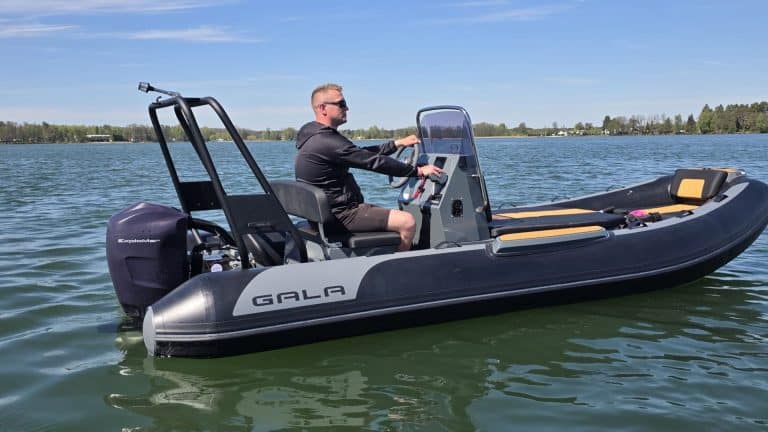
ExploMar high performance electric outboard systems are engineered to deliver consistent performance across a wide range of commercial applications, from marina assistance and harbor maintenance to crew transfer and professional workboats.
High-voltage battery architectures and advanced charging solutions help minimize downtime between operating periods.
By enabling efficient energy replenishment, ExploMar solutions help operators maintain vessel availability throughout demanding working days.
By minimizing mechanical complexity and reducing the number of traditional propulsion components, ExploMar electric outboard systems help operators simplify maintenance processes and improve fleet availability.
Smart Captain is ExploMar’s intelligent onboard control system, providing a smarter and more intuitive boating experience. It integrates propulsion control, vessel monitoring, energy management, and system diagnostics into one user-friendly interface, enabling operators to easily monitor performance and optimize every journey.
Smart Fleet is ExploMar’s digital fleet management platform designed to optimize commercial electric vessel operations. By monitoring vessel performance, battery status, energy usage, and maintenance data in real time, Smart Fleet helps operators improve efficiency, reduce downtime, and manage fleets more intelligently.
As ports and marinas continue their transition toward cleaner and more efficient operations, electric propulsion is becoming more than an environmental choice — it is an operational advantage.
With lower running costs, quieter performance, simplified maintenance, and intelligent energy management, electric outboards are redefining what modern service boats can achieve.
ExploMar is committed to supporting this transformation by delivering high-performance electric propulsion solutions that help professional marine operators build cleaner, smarter, and more efficient fleets for the future.